
 Gift
Gift  Autumn
  Beauty Corner
 Viral
Viral 













OUR UNIVERSES
Enjoy and explore the themed experiences created for those who are looking for something more

Choosing a perfume is usually a simple and very personal gesture. However, when skin is sensitive, the experience can change: some fragrances are too intense, others can cause minor discomfort, or simply don't feel comfortable on the skin.
Faced with this situation, many people end up avoiding perfume altogether or limiting their use to special occasions. But the truth is, it's not always necessary to give it up. There are softer fragrances and compositions that are better suited to delicate skin, allowing you to enjoy a pleasant scent without it being heavy or overpowering.
Understanding how olfactory notes, concentration, or application method work can make a big difference when choosing a women's perfume for sensitive skin that is comfortable and pleasant throughout the day.
It's not that your skin hates perfume, it's that its protective barrier is more sensitive than usual. The main culprit is usually alcohol. It's used to make the scent noticeable as you walk by, but when it evaporates, it can strip away your skin's natural moisture , leaving it unprotected.
In addition to this, we have fixatives (which make the scent last for hours) and some natural ingredients that, while they smell wonderful, can be a bit strong for easily irritated skin. If you notice any itching or redness, it's simply your skin telling you that this combination is too intense for it at that moment.
Another key factor is the fragrance concentration. Perfumes come in different formats—such as eau de parfum , eau de toilette , eau de cologne , or body mist —which vary in intensity. For sensitive skin, lighter concentrations are usually more comfortable, as they release the scent more gradually and gently, reducing the likelihood of irritation.
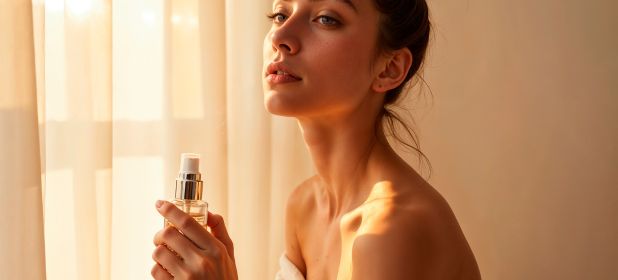
Sometimes we see "natural perfumes" and think they're safe, but beware! Nature has its own quirks. Some essential oils from plants or flowers can be more irritating than an ingredient created in a laboratory.
If your skin is prone to irritation, it's best to look for alcohol-free fragrances (usually water- or oil-based) or those labeled hypoallergenic . These latter fragrances have undergone specific tests to ensure minimal risk of allergic reactions. Remember, natural is great, but what truly matters is that it's gentle on your skin barrier.
When choosing a perfume for sensitive skin, the fragrance notes play a crucial role. Knowing which ones tend to be gentler helps reduce the risk of irritation and ensures a pleasant scent throughout the day.
When your skin is reactive, choosing a perfume shouldn't be rushed. Trying the fragrance carefully is the best way to see if it truly suits you.
A good first step is to apply a small amount to an inconspicuous area, such as the outside of your forearm, and wait a few hours to see how your skin reacts. If there is no itching, redness, or discomfort, that's a good sign.
It's also worth remembering that perfume evolves over time. What you perceive when you first apply it are the top notes , which are usually fresher and more intense, but then the heart and base notes appear, which linger on the skin for longer.
Therefore, before choosing a fragrance, it's best to let the perfume develop for several hours. This way you can see if the scent is still pleasant and if your skin tolerates it well.
Taking this little bit of testing time can make the difference between a perfume that only smells good in the moment and one that truly feels comfortable throughout the day.
If you have a perfume you love but are afraid it might irritate your skin, you don't have to keep it hidden away. The secret is to avoid applying it to areas where the skin is thinner, such as the neck or the inside of the wrists.
Try these expert tips:
Choosing a perfume when you have sensitive skin is, in reality, an exercise in self-care. It forces you to stop, to read, to try, and to listen to how your body reacts to different stimuli.
There's no magic formula that works for everyone, because every skin is different, but if you follow these guidelines of looking for soft notes and applying the fragrance strategically, you'll see that you can continue enjoying your favorite beauty ritual without fear of redness. Ultimately, the best perfume is the one that makes you feel good, inside and out.
Just register and we'll send you a welcome email with the bonus.







 Perfume
 Beauty Corner
 Univers
 Univers








 Commitment to
 Mothers
 Sun creams
 Sunglasses
 Beauty
 SUNGLASSES



.png)