 Gift
Gift  Autumn
  Beauty Corner
 Viral
Viral 












OUR UNIVERSES
Enjoy and explore the themed experiences created for those who are looking for something more
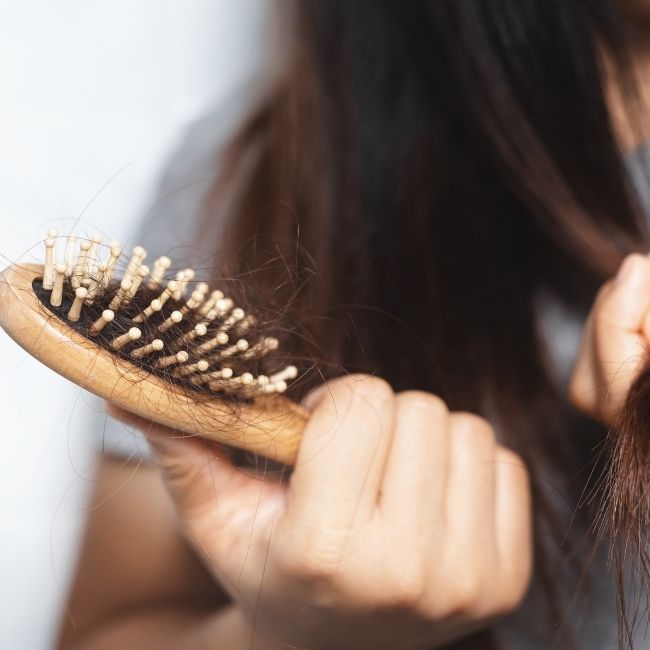
Do you wash your hair in the morning and a few hours later the roots already look flat against your scalp? If you have fine hair, this probably sounds familiar. In these cases, achieving volume isn't always about using more products, but about choosing the right ones and how you apply them.
When you use the wrong routine for fine hair , you're essentially fighting against your own hair structure instead of working with it. The experts' secret is to analyze your hair and understand how its structure responds with a few strategic adjustments to your daily routine. Let's look at them step by step.

Washing is the first step to achieving volume. In fine hair, excess oil or residue at the roots can make the entire head of hair look flatter.
The shampoo should be applied mainly to the scalp, massaging with your fingertips. There's no need to rub the ends: when rinsing, the lather that runs down the lengths is enough to clean them.
And how often should you wash it? There's no single frequency that works for everyone. If your scalp tends to get oily, you might need to wash it more often. The important thing is to observe how your hair responds, rather than trying to go several days between washes.
Always opt for gel or clear formulas , which are lighter than creamy or nourishing ones. Also, be sure to choose a shampoo with a neutral or balanced pH to keep the cuticle sealed and avoid that dreaded straw-like hair feeling after showering.
If you have fine hair, it's easy to think that conditioner only makes it straighter. But eliminating it completely isn't a good idea either: hair needs conditioning to stay smooth and prevent it from tangling or breaking easily.
The golden rule: apply conditioner from the mid-lengths to the ends . Never touch the roots, as they are nourished by the skin's own natural oils.
If you find your hair still feels heavy, you can try a lighter conditioner or use it before shampooing. This technique, known as reverse washing , involves applying conditioner from the mid-lengths to the ends before shampooing.
Leave it on for two minutes, rinse, and then wash your roots as usual. The hair fiber will absorb just the right amount of moisture without feeling heavy when it dries.
Gravity is often the biggest enemy of fine hair, but with a hairdryer in hand, you can turn it into your best ally. The simplest and most transformative trick is to dry your head upside down, letting the airflow push the roots in the exact opposite direction to their natural fall.
Always use air at a medium temperature , never at maximum heat. Fine hair fibers dehydrate and weaken much faster than thick ones at high temperatures. While applying air, use your fingertips to gently lift the roots; save round, heavy brushes for last if you want to refine the shape, but don't flatten the hair follicle while it dries.
This is where many people with fine hair unintentionally sabotage all the work they've done washing and drying. Heavy oils, waxes, and shine-enhancing creams are often the biggest enemies of volume because their dense texture weighs down the hair fiber and eliminates the natural movement that's so hard to achieve.
Replace them with airy textures like volumizing mousses or foams with flexible hold ; sea salt sprays to give body and a casual texture; texturizing powders , the jewel in the crown to apply directly to the root and create an instant lift that lasts for hours.
The way you apply it also matters. Instead of sweeping your hands downwards as if you were smoothing, use a claw motion, lifting from the roots upwards.
Sometimes your washing and styling routine is impeccable, but your hair still falls flat. When this happens, the solution isn't in the product bottle, but in the scissors. A straight, blunt cut weighs down on itself, making it virtually impossible to keep the roots upright.
The most elegant solution is invisible layers : thinning the hair from within to reduce weight without losing the feeling of density at the edges. Midi cuts (like a textured bob or a soft shaggy ) are ideal because they end right at the shoulders where fine hair starts to thin at the ends.
The best thing to do is explain to your hairdresser exactly what you're looking for. Wanting more movement is not the same as wanting your hair to look fuller, and the cut can be tailored to each case.
Nothing is more frustrating than achieving the perfect hairstyle in the morning and waking up the next day with your hair completely flattened, as if the night had erased all your effort. And in part, that's true: sleeping with your hair down creates constant friction against the pillow, which flattens the roots and frizzes the ends.
The pineapple trick , which involves gathering all your hair high up with a soft elastic band, helps the roots maintain their shape while you sleep instead of being compressed against your head. Complementing this with a silk or satin pillowcase reduces friction and prevents the frizz that often occurs with traditional cotton pillowcases.
Having fine, limp hair isn't a problem to be fixed; it's a feature with many advantages. It dries in half the time, has enviable natural softness, and is incredibly manageable when you find the right techniques.
Don't try to change your whole life overnight. Choose just one habit from this list and try it this week. You'll see how, with very little effort, your hair starts to respond with body, movement, and so much more attitude.
Just register and we'll send you a welcome email with the bonus.





 Perfume
 Beauty Corner
 Univers
 Univers








 Commitment to
 Mothers
 Sun creams
 Sunglasses
 Beauty
 SUNGLASSES