 Gift
Gift  Autumn
  Beauty Corner
 Viral
Viral 













OUR UNIVERSES
Enjoy and explore the themed experiences created for those who are looking for something more
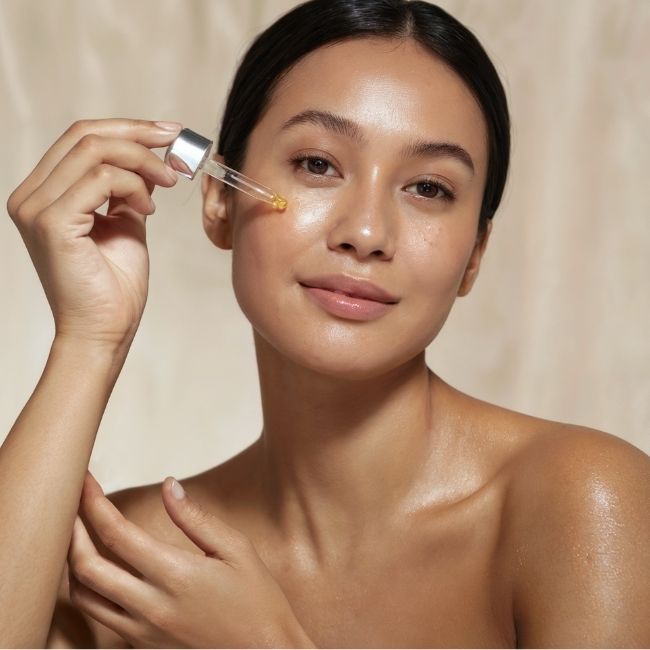
Coconut oil has gone from being that exotic ingredient only seen in cooking recipes to being practically everywhere: on the nightstand, in the travel toiletry bag, even in the gym bag of some friend who swears it's her secret to everything. And she's partly right; few natural products are so versatile.
The problem is that, with so much popularity, many people misuse it. It's not uncommon to hear someone with oily skin say their face broke out in pimples right after trying it, or someone with fine hair complain that it became even more matted than before. It's not that coconut oil is bad; it's just that you need to know where and how to apply it.
I'll tell you which uses really work, and which ones you can save money on depending on your skin and hair type.
Coconut oil is extracted from the pulp of mature coconuts, and although all the jars in the supermarket look the same, they're not. There's a difference that significantly changes the result: virgin or refined .
Virgin coconut oil is obtained without chemical processes or excessive heat, so it retains more of its original properties; and also a stronger coconut aroma, for those who care about that. There is also cold pressing , which is the most common method for extracting virgin coconut oil, although it can also be produced by other mechanical processes or centrifugation.
Refined oil, on the other hand, goes through a bleaching and deodorizing process, which leaves it more neutral in aroma and texture, but also with fewer of those active compounds that work their magic on the skin.
This difference matters because the same type isn't always suitable depending on what you want to do with it.
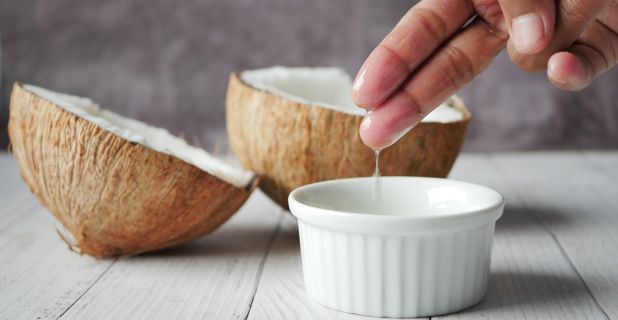
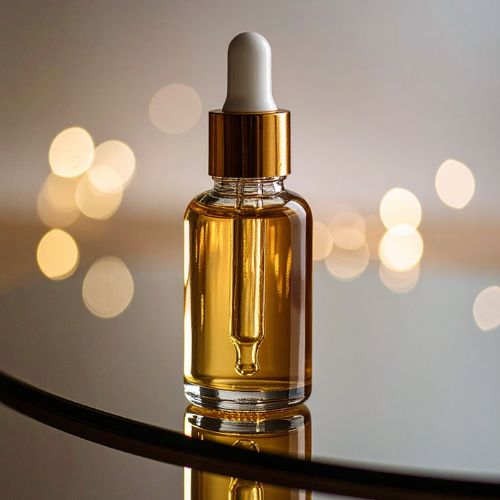
For dry skin , coconut oil can be a great ally. It can be used like a serum, with a few drops applied after cleansing and gently massaged until absorbed, or simply mixed with your usual moisturizer for extra nourishment on particularly cold nights or after prolonged sun exposure.
It also works very well as the first step in a double cleanse : applied to dry skin, it dissolves makeup and sunscreen before using your usual cleanser with water. However, it should never be the only cleansing step, because it leaves a film that needs to be thoroughly removed.
And outside the face, in areas of the body that tend to get drier , such as elbows, heels and knees, just a little coconut oil before going to sleep is enough; it makes a noticeable difference in a few days.
If there's one use that made coconut oil go viral, it's this. Applied as a mask before washing , it seals the hair cuticle , controls frizz , and leaves a shine that many shampoos can't achieve on their own.
The correct way is to apply it to dry hair, from the mid-lengths to the ends, leave it on for 20 minutes or overnight, and then wash it out with shampoo as usual. If you apply it to wet hair, however, the result is usually more superficial. It's more effective at providing a temporary shine than deep nourishment.
An important detail: if you have an oily scalp, it's best to avoid applying it to the roots. It can add oil where there's already too much.
Beyond skin and hair, coconut oil has several little tricks worth knowing. It works as an emergency lip balm when you've forgotten yours. It's also great as a cuticle moisturizer to prevent dryness right before a manicure. And it can even be used as a finishing touch for eyebrows , giving them a controlled shine without the need for a specific gel.
Some people also use it as a light base before bronzer, to achieve that satin effect on legs or collarbones; although for this it is best to apply it in a very thin layer, because in excess it can look more greasy than radiant.
Let's be honest, because it's not all wonderful. Coconut oil is a comedogenic ingredient, which simply means it can clog pores . If you have oily skin or are prone to acne , using it on your face can make things worse instead of better.
It's also not true what you sometimes read about it working as a sunscreen, because its ability to block UV rays is minimal, so it should never replace your usual SPF.
And on fine hair, although it may sound contradictory after all of the above, it can feel heavy and leave your hair weighed down instead of shiny. Use it in very small amounts, or simply opt for a lighter type of oil.
For skin and lips, virgin or cold-pressed oil is ideal because it retains more nutrients and gives the best results on the face. For hair, however, refined oil often works just as well, and since it has less of an odor, it's more convenient for those who don't want to smell like piña colada all day.
Always check that the packaging indicates the type of extraction process , and if your skin is prone to acne, start by testing it on a small area before applying it to your entire face.
If you have dry skin or dull hair, coconut oil might be just what you need. If you have oily skin or a scalp that tends to get greasy quickly, it's best to reserve it for your lips, cuticles, or ends, and avoid your face and roots.
Now you know what to expect from this versatile ingredient, and if you want to start incorporating it into your routine, here you can find the best version, depending on what your skin and hair are asking for.
Just register and we'll send you a welcome email with the bonus.







 Perfume
 Beauty Corner
 Univers
 Univers








 Commitment to
 Mothers
 Sun creams
 Sunglasses
 Beauty
 SUNGLASSES