 Gift
Gift  Autumn
  Beauty Corner
 Viral
Viral 












OUR UNIVERSES
Enjoy and explore the themed experiences created for those who are looking for something more
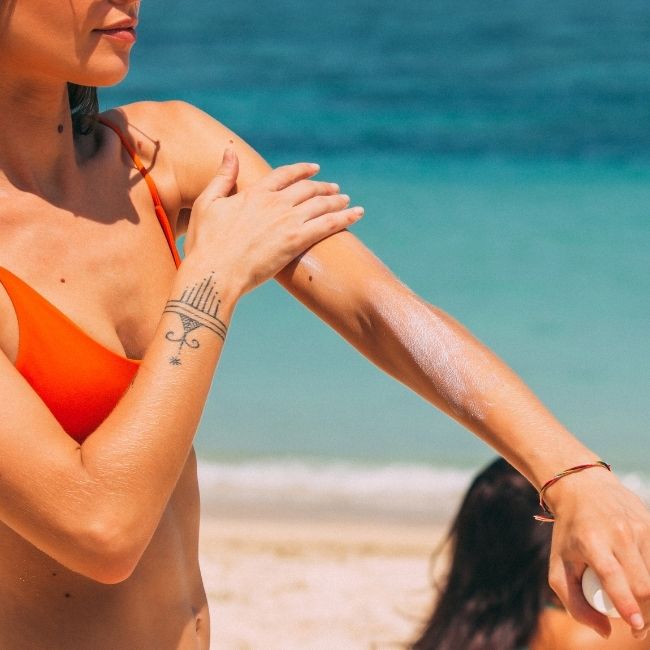
Every morning you promise yourself you won't leave the house without sunscreen. But when you wake up you're already running late, and your usual sunscreen—"the one that leaves your skin white and takes ages to absorb"—is left unused on the bathroom shelf once again.
It's in moments like these that sunscreen sticks have carved out a niche for themselves. Their practicality, thanks to their size and solid texture that goes directly onto the skin without needing to use your hands, is what makes them so appealing. But just because something is convenient doesn't mean it's perfect for everything or every situation. Let's take a look at the stick sunscreen without marketing filters: what it actually does well, where it falls short, and, above all, for whom it makes sense in their daily routine.
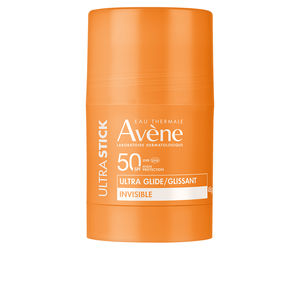
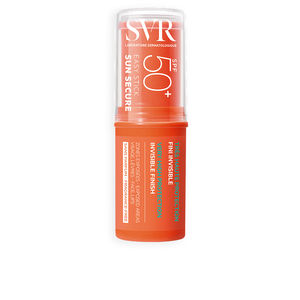
A sunscreen stick is a solid bar (usually formulated with waxes, silicones or vegetable butters that give it that compact consistency) that is applied by sliding it directly onto the skin, without passing it through the hands.
It's not a recent invention, but it has made a strong comeback in recent years, largely thanks to the rise of minimalist beauty routines and an audience that increasingly values speed without sacrificing care.
Unlike traditional creams, there's no need to measure out amounts with your fingers or wait for it to be fully absorbed before applying makeup : simply apply, blend lightly with your fingertip, and you're done. This simplicity is probably why so many people have incorporated it into their daily routine.

The stick's solid texture allows for easy application of the product to small and delicate areas of the face, such as the eyelids , the eye contour , the lips , the ears , or the hairline .
In contrast, applying sunscreen to these same areas with a liquid lotion without waiting for it to absorb can end in disaster: it runs, gets in your eyes, or simply doesn't stay where it should. The stick format allows you to go straight to the point, without wasting product or getting your fingers dirty, something especially appreciated by those who wear makeup on top and don't want to ruin hours of work with an excess of poorly applied cream.
It's also often the perfect ally for quick touch-ups in the mid-afternoon, when you're already wearing foundation and blush and don't feel like undoing your look to reapply sunscreen.
Sunscreen sticks fit in a pants pocket, the smallest compartment of a backpack, or a handbag without needing a resealable bag for fear of spills. This is, quite simply, why so many people end up buying one.
Its compact, drip-free format makes it easy to use on the bus, at the beach with sandy hands, or in the middle of a mountain hike without having to stop for a towel. Especially for athletes who hike , run outdoors , or simply spend the day away from home without access to a bathroom to wash their hands, the stick solves a very specific problem: reapplying sunscreen without rubbing.
It's not all advantages; the stick also has its limitations. The solid texture that makes the stick so comfortable on the face works against it when it comes to covering large areas, such as the back, legs, or arms.
When applying the product, calculating the correct amount is more difficult compared to a cream or lotion. The stick format often leaves too thin a layer, sometimes even missing areas due to its shape. Sun protection experts generally agree that the amount applied is as crucial as the chosen sun protection factor (SPF), and with a stick format, this control is easily lost if it's intended to be used as the sole body sunscreen.
The most honest recommendation from specialists is to combine the use of the stick with a cream or lotion when the goal is to cover the entire body.
Compared to a moisturizer or a light lotion , a stick usually leaves a different feeling on the skin: drier, sometimes with a slight waxy feel that not everyone likes, especially on skin that is already dehydrated or prone to flaking.
Those with very dry skin may notice that, after several applications throughout the day, the treated area needs more nourishment than the stick alone can provide. It's also not the quickest format for reapplying to large areas under the direct midday sun, where a mist or fluid spreads in seconds.
On normal or combination skin, and when applied to specific areas, this difference in sensory experience goes virtually unnoticed.
Let's consider some specific profiles. There's the person who does outdoor sports and needs to reapply facial sunscreen without interrupting their activity or getting their hands dirty. There's the person who wears makeup all day and just wants to reinforce protection on their cheekbones and nose in the mid-afternoon, without undoing their previous work. And there's the person who simply travels light and prefers a single multi-purpose product for their face and sensitive areas during a beach or mountain vacation.
For all of them, the stick is not a whim; it is a tool that solves a very specific need within a broader sun protection routine, which in summer usually requires frequent reapplications and quick gestures that do not interrupt the day.
Sunscreen sticks aren't meant to replace traditional sunscreen; they're meant to complement it when convenience and precision are more important than full coverage. Using them correctly means understanding their limitations: perfect for the face, sensitive areas, and touch-ups on the go; insufficient if you expect them to protect your entire body on their own.
As with almost everything in skincare, the key is combining formats according to the time and need. Here you'll find different options to put together a complete routine, from lightweight textures for everyday use to more practical solutions you can take with you without a second thought.
Just register and we'll send you a welcome email with the bonus.







 Perfume
 Beauty Corner
 Univers
 Univers








 Commitment to
 Mothers
 Sun creams
 Sunglasses
 Beauty
 SUNGLASSES