 Autumn
 Beauty Corner
 Viral






OUR UNIVERSES
Enjoy and explore the themed experiences created for those who are looking for something more

For skiing, you need goggles with a category 3 or 4 filter and UV400 protection, capable of blocking ultraviolet rays and protecting your eyes from the intense light reflected by the snow. If it's windy, snowing, or you're skiing at high speed, goggles offer the best protection. On clear, windless days, sunglasses with good side coverage may be sufficient. Polarized lenses also help reduce glare on the snow, although they aren't essential.
Freshly fallen snow reflects up to 80% of ultraviolet rays, according to the World Health Organization (WHO). Furthermore, radiation increases by approximately 10% for every 1,000 meters of altitude. Therefore, when skiing, your eyes receive solar radiation both directly and through light reflected off the snow.
Unprotected sun exposure can cause photokeratitis, also known as snow blindness. This is a corneal condition that causes burning, watering, and discomfort in bright light. It is temporary and can be prevented by wearing goggles with a snow filter.
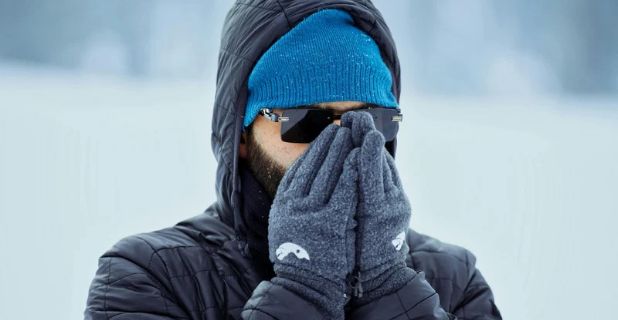
Sunglasses are classified from 0 to 4 according to their VLT (Visual Light Transmittance), which is the percentage of visible light they allow to pass through their lenses. This percentage is known as VLT (Visible Light Transmission) and is defined in the EN ISO 12312-1 standard. The higher the VLT, the less light passes through the lens and the greater its ability to reduce glare.
In addition to choosing the correct category, check that the glasses have UV400 protection and the CE marking. The UV400 filter blocks ultraviolet rays up to a wavelength of 400 nanometers, while the CE marking indicates that the product meets applicable European requirements.
The main difference between using sunglasses and goggles isn't protection from ultraviolet rays, but rather the coverage and protection they offer from the weather. Sunglasses are lighter and more versatile, allowing air to circulate around the sides, which improves ventilation during physical activity. They are also usually more affordable and can be used for skiing on clear days, ski touring, snowshoeing, or simply walking around the resort.
The ski goggle, on the other hand, covers a larger area of the face and fits snugly around the eyes. Its design offers better protection against wind, powder snow, and blizzards. It's also designed to be used with a ski helmet to prevent cold air from entering from the sides.
If you're skiing on the slopes at a moderate speed on a clear, windless day, category 3 goggles with good side coverage may be sufficient. However, if there's a blizzard, it's snowing, or you're skiing off-piste, goggles offer more complete protection.
To choose good sunglasses for the snow, pay attention to the frame shape, materials, and lens type. These are some of the aspects to consider.
The curved, wraparound frames offer better protection to the sides of the eyes and reduce light and wind entering through the edges. They also provide greater support during sports activities.
Look for lightweight, flexible frames made from impact-resistant materials. This will make them more comfortable during long days in the mountains and better able to withstand accidental bumps.
Polarized lenses reduce glare on the snow, helping to minimize reflections on sunny days. However, they can make it harder to see patches of ice by reducing the reflections that make them visible. If you ski on icy slopes, keep this in mind before choosing your lenses.
The color of the lenses also influences the perception of the environment.
The choice of sunglasses depends primarily on the weather and the type of activity you'll be doing. Sunglasses are a good option for skiing on clear days, ski touring, snowshoeing, or walking around the resort. They're also practical for relaxing and after skiing.
However, it's preferable to use a goggle mask when there's strong wind, a blizzard, snow, or when you're going to descend at high speed. Its greater coverage better protects the eyes from adverse weather conditions.
Whatever you choose, make sure the goggles have UV400 protection, CE marking, and a filter category appropriate for the light conditions. Category 3 is usually sufficient for skiing on sunny days, while category 4 is reserved for extremely bright conditions and should not be used for driving.
At Perfume's Club you can explore our catalog of snow goggles to get equipped before heading up the mountain.
Just register and we'll send you a welcome email with the bonus.





 Perfume
 Beauty Corner
 Univers
 Univers


 Commitment to
 Beauty
 Special
 SUNGLASSES
 Mothers
 Sunglasses