 Gift
Gift  Autumn
  Beauty Corner
 Viral
Viral 













OUR UNIVERSES
Enjoy and explore the themed experiences created for those who are looking for something more

Have you ever woken up staring at the ceiling and wishing your skin could be doing something more while you sleep? It's not a new idea—overnight masks have been promising us exactly that for decades—but now it has a new name, its own aesthetic, and millions of views on TikTok: it's called the morning shed , and it has transformed the nighttime routine into a ritual of layers, patches, tapes, and products that many people apply before turning off the lights.
Before you rush to buy everything, it's worth understanding exactly what it is, what part has real backing, and where the excess begins.
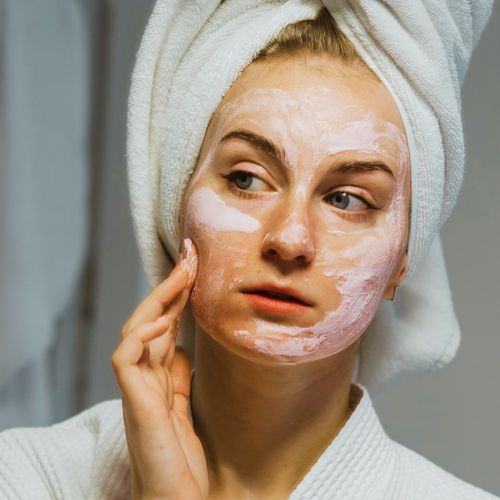
The term "morning shed" refers to the practice of applying multiple products to the face before bed: occlusive masks , nourishing balms , hydrogel patches , facial oils , firming tapes , and even massage or compression devices . The idea is to wake up and remove all those layers, revealing smoother, brighter, and more hydrated skin.
The idea stems from a real phenomenon: skin regenerates while you sleep and responds better to certain active ingredients at night. The problem arises when this foundation becomes an excessive buildup of layers that doesn't always improve the results.

During sleep, collagen production is activated, cortisol levels decrease, and cell renewal accelerates. According to studies on skin chronobiology, skin permeability increases by up to 20% at night, meaning that active ingredients penetrate better and hydration is retained more effectively.
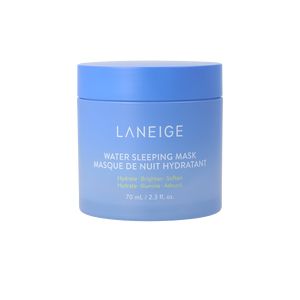
This explains why a good night cream , a regenerating serum , or a sleeping mask makes sense when applied before bed: the time is truly optimal for the active ingredients to do their job.
The idea that more layers mean better results is simply unfounded. Skin doesn't absorb by accumulation; it absorbs by affinity and in order. Each layer you add on top of another can block the penetration of the previous one or create interactions between ingredients that cancel out their effects.
Not everything in this trend is negligible. There are elements that, when applied judiciously, do add value:
What doesn't make sense: piling five products on top of each other haphazardly, combining incompatible active ingredients ( retinol with vitamin C , for example), or using compression tapes and gadgets without supervision. In skincare, more layers don't mean better results.
There is no universal answer, but there are profiles for whom a more nourishing nighttime routine makes more sense than for others:
A sleeping mask or a nourishing balm as the final step can make a real difference. Your skin barrier needs that boost.
If you are in a period of stress, seasonal change or intense sun exposure, the night is the ideal time to compensate with calming and regenerating actives such as niacinamide, panthenol or centella asiatica.
If you have combination or oily skin, the most effective nighttime routine is usually lighter, not heavier. A treatment serum and a non-occlusive cream are sufficient, and in many cases, superior to any thick mask.
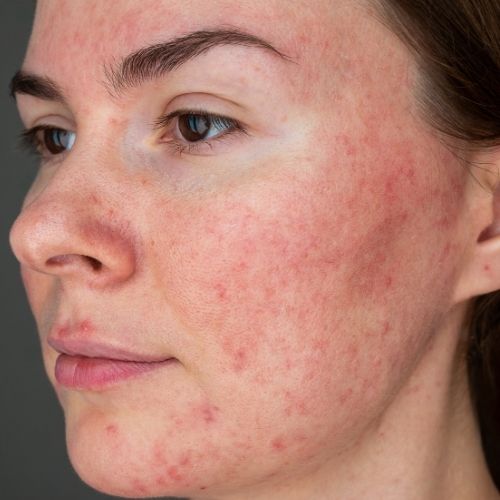
If you multiply the products, you multiply the risk of irritation. Fewer layers, more selective active ingredients.
An effective nighttime routine doesn't need many steps, but the right ones.
First, a thorough cleansing to remove makeup, SPF, or impurities.
Next, a main active ingredient according to your need (hydration, blemishes or renewal).
Finally, a night cream or sleeping mask to seal in the care.
Extras like oils or patches should be used occasionally, not daily. The key is consistency, not quantity.
The biggest problem with the morning shed as it's practiced in networks isn't the intention, it's the execution. These are the most common mistakes:
Combining incompatible ingredients : retinol and exfoliating acids together at night irritate the skin instead of enhancing each other's effects. Retinol and vitamin C also don't mix well in the same nighttime routine.
Using occlusive products without cleansing properly first : If you apply a very thick balm over makeup residue, sunscreen, or dirt, you seal it all into the skin. The result can be cosmetic acne or clogged pores.
Confusing more expensive with more effective : the effectiveness of a nighttime routine depends on the concentration of active ingredients, the order of application, and the compatibility between ingredients, not on the price or the number of products.
Stopping after three days because you don't see any results : the nighttime regenerating actives work in 28-day cycles, which is the time it takes for the skin to completely renew itself. Visible results appear after 4–6 weeks of consistent use.
The morning shed makes sense as an idea: taking care of your skin at night . But it loses its effectiveness when it becomes an excessive routine.
Skin responds best to simple, consistent routines tailored to its real needs, not to the accumulation of products.
Before following a trend, the key question is: does this actually do anything for my skin or does it just add steps?
Just register and we'll send you a welcome email with the bonus.







 Perfume
 Beauty Corner
 Univers
 Univers







 Commitment to
 Mothers
 Sun creams
 Sunglasses
 Beauty
 SUNGLASSES